
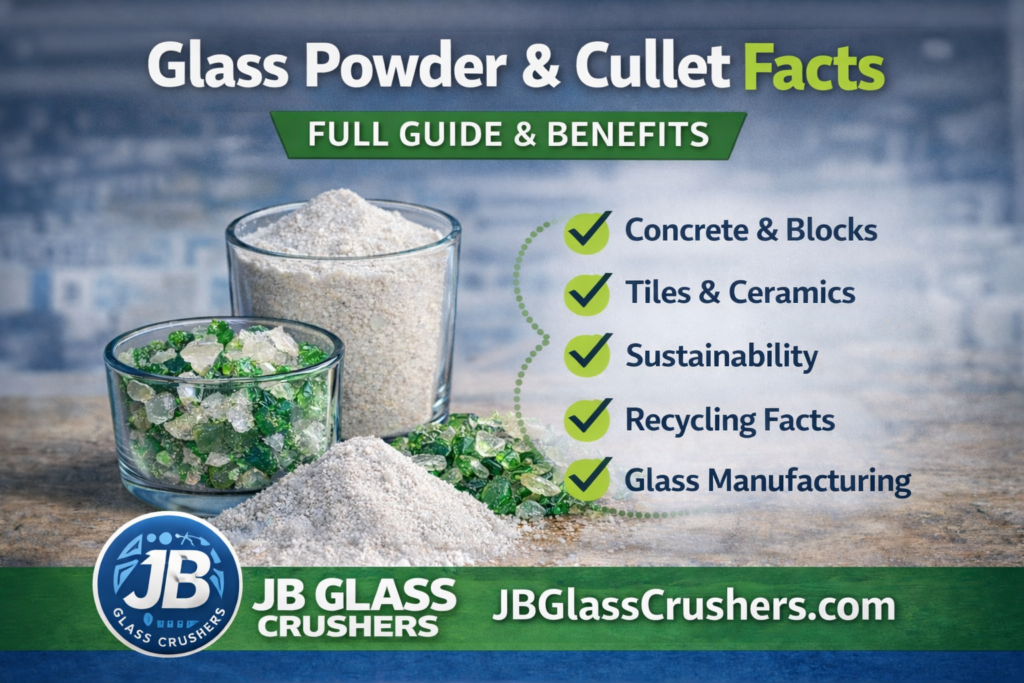
JB Glass Crushers turns waste glass into high-value glass powder and cullet for sustainable construction and manufacturing.
What Is Glass Powder?
Glass powder is finely ground glass made from recycled bottles, flat glass off-cuts, or virgin glass. The particles typically range from a few microns up to about 1 mm, depending on the application. When ground very fine (usually <75 μm), waste glass behaves like a pozzolanic material, meaning it can react with cement hydrates and contribute to strength and durability in concrete.
What Is Glass Cullet?
Glass cullet is clean, crushed glass prepared for remelting or for use as an industrial raw material. It is produced by collecting, sorting, cleaning, and breaking glass waste from factories (internal cullet) or from post-consumer sources like bottles and jars (external cullet).
Facts
- 1 ton of recycled glass (cullet) can save more than 1 ton of natural raw materials such as sand, soda ash, and limestone.
- Every 10% cullet in glass furnaces reduces energy use by about 2–3% and can cut particulate emissions by around 8%.
- Using high percentages of cullet can lower total melting energy by up to ~30% compared with using only virgin raw materials.
- India currently recycles roughly 45% of its glass waste, meaning there is still large potential to capture more cullet and glass powder from the waste stream.
- Recycled glass powder used as a cement replacement can reduce the embodied environmental impact of mortars by as much as ~35% in some mix designs.
Properties of Glass Powder
1. Chemical Composition
Most construction-grade glass powder comes from soda-lime glass:
- Silica (SiO₂): ~70–74%
- Soda (Na₂O): ~12–16%
- Lime (CaO): ~6–12%
- Minor oxides (MgO, Al₂O₃, Fe₂O₃)
This chemistry is similar to many natural pozzolans and industrial SCMs (supplementary cementitious materials). See full specifications on our Technical Data Sheet page.
2. Particle Size & Reactivity
- Coarse grades (100–1000 μm): used as decorative aggregate or sand replacement.
- Fine grades (<75 μm): show pozzolanic activity, consuming calcium hydroxide and forming extra C-S-H gel in concrete, which refines pore structure and improves strength and durability.
3. Physical & Performance Benefits
- High hardness and angularity
- Chemically stable and non-biodegradable
- In fine form, improves concrete’s compressive strength, density and resistance to chloride and sulfate attack when used at suitable replacement levels (typically 10–20% of cement).
4. Key Uses of Glass Powder
Construction & Concrete
- Cement replacement: 10–30% replacement of ordinary Portland cement (OPC) in concrete and mortar mixes. Studies show equal or higher long-term strength and better durability when the mix design is optimised.
- Fine aggregate replacement: Partially replaces natural sand in mortars and concrete blocks to reduce river-sand mining.
- Eco-concretes (“green concrete”): Contribute to a lower CO₂ footprint and support climate-neutral concrete targets.
Ceramics & Tiles
- Used as a flux in ceramic bodies and glazes, lowering firing temperatures and saving energy.
Coatings, Paints & Polymers
- Functional filler for industrial paints, floor coatings and plastics to increase hardness, abrasion resistance and surface smoothness.
Decorative & Architectural Uses
- Colored glass powder for terrazzo floors, resin countertops, mosaics, decorative plasters and landscape finishes, offering recycled content plus aesthetic value.
5. Properties and Benefits of Glass Cullet
Types of Cullet
- Internal cullet: In-house production scrap, off-spec glass, trimmings; usually very clean and goes directly back into the furnace.
- External cullet: Collected from households and industries; must be sorted by colour (flint, green, amber), cleaned and size-reduced before use.
Advantages in Glass Manufacturing
- Raw-material savings: Up to 1.2 tonnes of virgin raw materials saved per tonne of cullet in float-glass production.
- Energy savings: Melting cullet requires significantly less energy than melting virgin batch materials; every 10% increase in cullet can provide 2–3% furnace energy savings.
- Lower emissions: Higher cullet rates reduce CO₂, NOx, SO₂ and particulate emissions from furnaces, and can extend furnace life.
Non-Glass Applications of Cullet
Beyond remelting into new glass, cullet is used for:
- Construction aggregates: For road base, asphalt, and backfill
- Filtration media: As a replacement for silica sand in water filters
- Foam glass and insulation products: Lightweight, fire-resistant and thermally insulating materials made from foamed cullet
- Decorative aggregate: Landscaping, terrazzo flooring, pavers and precast panels
6. Sustainability & Environmental Impact
CO₂ and Energy
In glass furnaces, high cullet ratios (sometimes >50% in coloured container glass) significantly cut energy use and emissions while maintaining product quality.
Manufacturing cement and glass from virgin materials is highly energy-intensive.
Using waste glass powder in concrete reduces cement demand, leading to lower embodied CO₂. Reviews report that incorporating waste glass powder as SCM can decrease the embodied environmental impact of mortars and concrete by up to ~35%, depending on the replacement level and mix design.
Circular Economy
Both glass powder and cullet are central to a circular economy approach:
- They divert glass from landfills, where it would otherwise persist for centuries.
- They turn a low-value waste into high-value inputs for construction, ceramics, filtration and new glass products.
- They reduce pressure on natural sand, limestone and other mined resources, which are under growing environmental and regulatory scrutiny.
Technical Considerations
- Alkali–silica reaction (ASR): Coarse glass aggregate can sometimes trigger ASR in concrete. Grinding glass to a fine powder (SCM size) largely mitigates this risk and can even help control ASR expansion.
- Quality control: For both glass powder and cullet, controlling contaminants (ceramics, metals, organics, heat-resistant or lead glass) is essential for consistent performance. Modern plants use optical sorting, magnets, screens and washing systems to meet specification limits.
Why Glass Powder & Cullet Matter for Sustainability
Raw-material savings: Using 1 tonne of cullet saves about 1.2 tonnes of virgin raw materials such as sand, limestone, dolomite and soda ash.
Energy savings in glass furnaces:
- Every 10% increase in cullet usage reduces melting energy by roughly 2–3%.
- At high cullet ratios, total energy demand for melting can drop by up to ~30% compared with only a virgin batch.
- CO₂ emission reduction:
- Recycling 1 tonne of cullet can avoid up to ~0.7 tonne of CO₂ emissions in glass manufacturing.
- In cementitious materials, replacing part of the cement with waste glass powder has shown up to ~35% lower embodied environmental impact in some mortar mixes.
- Landfill & resource protection:
- Glass is non-biodegradable. Using it as powder or cullet diverts a long-life waste from landfills and reduces pressure on natural sand and limestone quarries.
Recycling Potential
- India generates an estimated 3 million tonnes of glass waste per year, but only about 35–45% is formally recovered and recycled; the rest is dumped or down-cycled. Our recycling solutions support national sustainability goals.
- A large share of recycling is done by the informal sector, which collects and sells bottles and scrap glass, but much of the material still never returns to high-value applications.
- This means there is huge untapped potential in India to:
- Increase cullet content in domestic glass furnaces
- Convert mixed and broken glass into value-added glass powder for concrete, tiles and other building materials
- Cut national emissions and reduce dependence on imported raw materials
In India, more than half of our glass waste still doesn’t come back into the production loop. By turning it into high-quality glass powder and cullet, we unlock real CO₂ savings and protect scarce raw materials.
Industries We Serve
1. Concrete & Blocks
- Applications
- Supplementary cementitious material (SCM) in ready-mix concrete and precast
- Fine aggregate replacement in concrete blocks, pavers and kerb stones
- Non-structural elements, interlocking tiles and eco-bricks
- Benefits
- Reduced cement usage → lower CO₂ footprint
- Improved durability and denser microstructure when fine glass powder is optimised in the mix
- Attractive finishes when coloured glass is used for exposed surfaces
2. Tiles, Ceramics & Terrazzo
- Applications
- Flux and filler in wall & floor tiles
- Decorative terrazzo flooring and polished concrete
- Glazes, engobes and ceramic frits
- Benefits
- Lower firing temperature and energy savings thanks to the fluxing action of glass
- High recycled content to meet green-building criteria
- Unique colours and sparkle using coloured cullet and powder
3. Glass Manufacturers
- Applications
- Container glass (bottles & jars)
- Flat/float glass, tableware and speciality glass
- Benefits of cullet
- Lower batch cost and less dependence on virgin raw materials
- Reduced melting energy and furnace wear
- Lower CO₂, NOx and SOx emissions, helping meet ESG and compliance targets
4. Filters & Special Applications
- Applications
- Glass filter media for swimming pools, industrial water treatment and wastewater plants
- Fillers in paints, coatings, sealants and resin systems
- Lightweight foam-glass aggregates for insulation and geotechnical fills
- Benefits
- Higher filtration efficiency and less bio-film build-up compared with traditional sand
- Chemically inert and non-leaching
- Fire-safe and long-life for insulation and backfill products
Technical Specifications
You can present this on your site as a table; here’s the kind of data buyers expect.
1. Glass Powder Grades
- Particle size ranges (D50 or sieve range)
- GP-100: 0–100 µm (cement replacement/admixture)
- GP-300: 0–300 µm (mortars, screeds, coatings)
- GP-1000: 0–1 mm (decorative, terrazzo, epoxy floors)
- Bulk density (loose)
- Typically 1.1 – 1.5 g/cm³, depending on grading and moisture
- Colour options
- Clear / off-white (mixed flint)
- Green mix
- Amber / brown mix
- Custom blends for terrazzo / décor
- Packaging
- 25 kg HDPE bags with inner liner
- 1 MT jumbo bags
- Custom palletisation (shrink-wrapped, fumigated pallets for export)
2. Glass Cullet Grades
- Size ranges
- 0–3 mm (fine cullet for filtration/terrazzo/glass batch)
- 3–8 mm (general concrete, tiles, landscaping)
- 8–25 mm (landscaping, decorative, foam glass feedstock)
- Colour separation
- Flint (clear)
- Green
- Amber
- Mixed colour (for construction aggregates and foam glass)
- Typical properties
- Apparent density: 1.3 – 1.6 g/cm³ (depending on size)
- Moisture: <0.5% (on delivery)
- Ceramic/stone/metal contamination: kept within customer-specified limits (e.g. <20 g/tonne for furnace-grade cullet)
FAQs
Q1. Is glass powder safe to use in concrete?
Yes, when processed to the correct fineness and used at recommended replacement levels (often 10–25% of cement), glass powder is safe and can actually enhance durability. Fine particles reduce the risk of alkali–silica reaction (ASR) and act as a pozzolanic SCM.
Q2. How much cullet can glass manufacturers use in their furnaces?
Many container-glass plants globally operate with 30–60% cullet, and coloured glass can sometimes go even higher, depending on furnace design and cullet quality. Higher cullet rates improve energy and CO₂ performance but require strict control of contaminants and colour.
Q3. Does glass powder really help reduce CO₂?
Yes. Cement production is very carbon-intensive. Replacing a portion of cement with waste glass powder reduces clinker demand and therefore cuts embodied CO₂ of concrete mixes, with some studies reporting up to ~35% lower environmental impact for optimised mixes.
Q4. What’s the difference between glass powder and cullet?
- Cullet is crushed glass in granular form, mainly used as a raw material for new glass or as aggregate.
- Glass powder is finely ground glass (often <75 µm) used as a cement additive, filler or decorative fine aggregate.
Q5. Can mixed-colour or contaminated glass still be used?
Even if it is not suitable for direct remelting, mixed and slightly contaminated glass can be processed, cleaned and ground into construction-grade glass powder or cullet for concrete, tiles, terrazzo, filter media and foam-glass products—keeping it out of landfills.
Full FAQ list here → Glass Powder & Cullet FAQ