Construction Materials

Metakaolin Vs Glass Powder

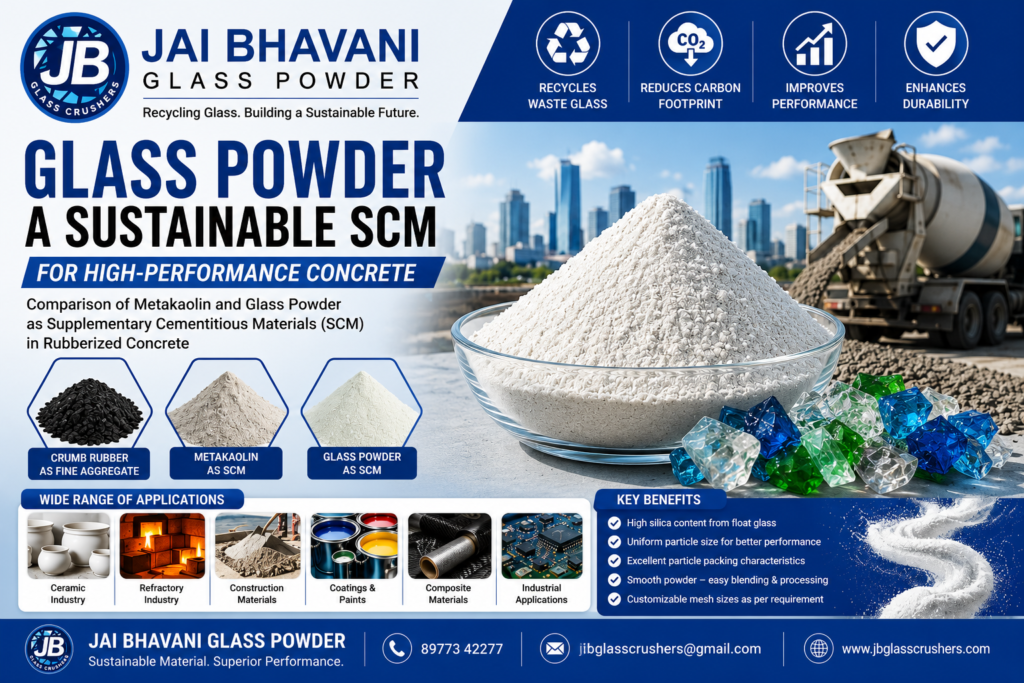
Metakaolin Vs Glass Powder: How Glass Powder is Sustainable Supplementary Cementitious Material for High-Performance Concrete

How Jai Bhavani Glass Powder Supports the Future of Green Construction The construction industry is actively seeking sustainable alternatives to reduce cement consumption, lower carbon emissions, and improve resource efficiency. One promising solution is the use of finely processed glass powder as a Supplementary Cementitious Material (SCM). Recent research comparing Metakaolin and Glass Powder in […]

Metakaolin Vs Glass Powder: How Glass Powder is Sustainable Supplementary Cementitious Material for High-Performance Concrete Read More »

How Glass Is Transforming Sustainable Construction

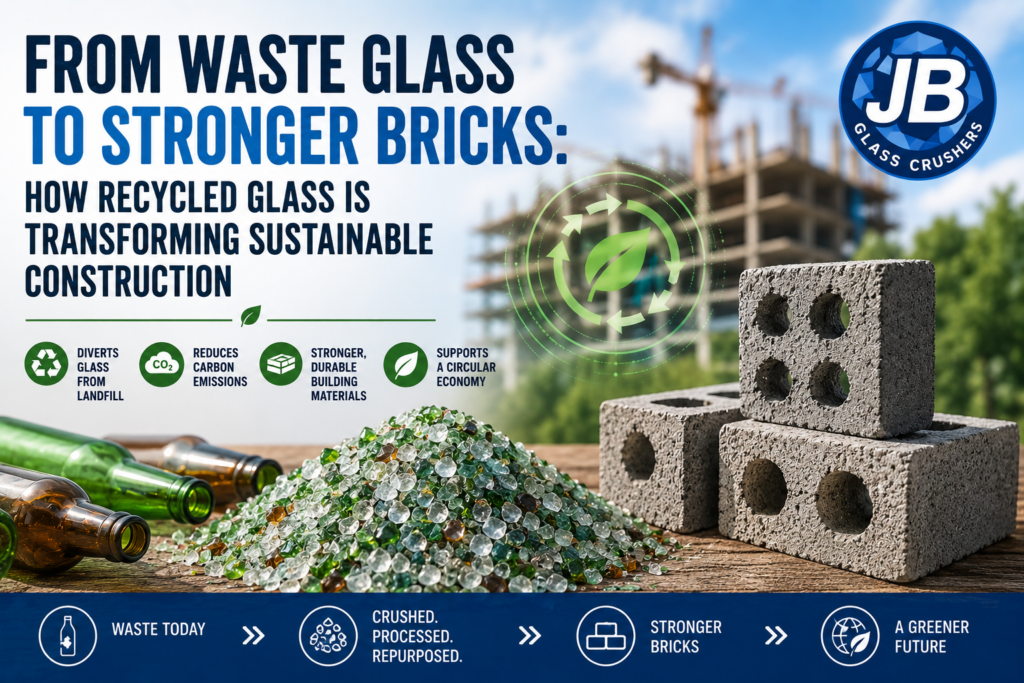
From Waste Glass to Stronger Bricks: How Glass Is Transforming Sustainable Construction

Every year, millions of tonnes of glass end up in landfills despite being one of the most recyclable materials on the planet. As industries seek more sustainable solutions, innovative research is proving that waste glass can become a valuable resource rather than an environmental burden. Recent developments in ceramic additive manufacturing have demonstrated how glass

From Waste Glass to Stronger Bricks: How Glass Is Transforming Sustainable Construction Read More »

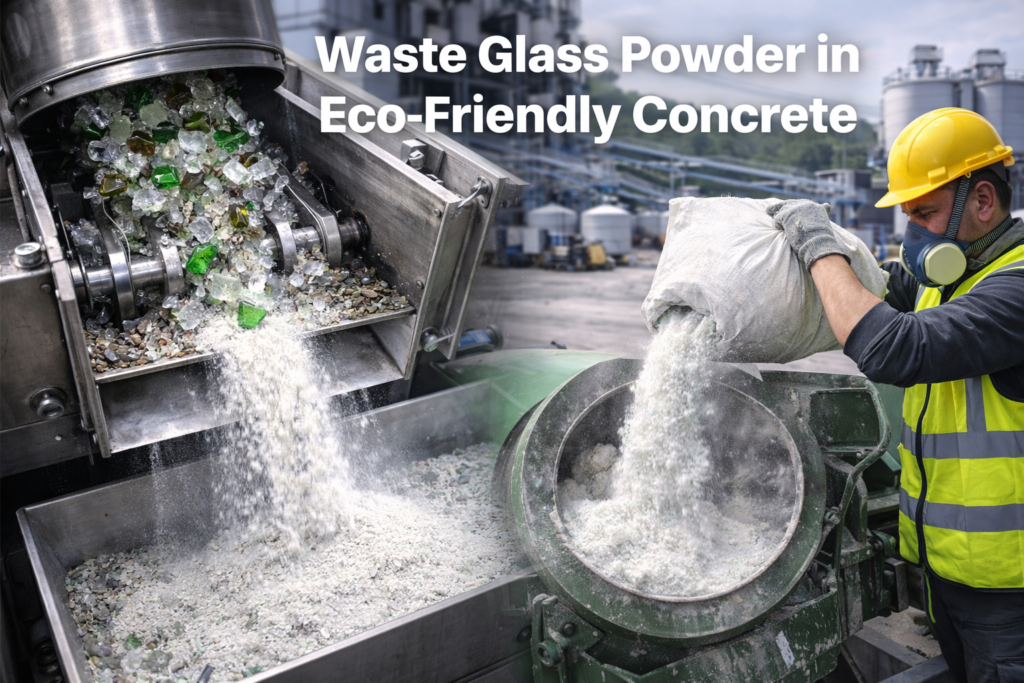
Utilization of Waste Glass Powder and Waste Glass Sand in the Production of Eco-Friendly Concrete

The construction industry is among the largest consumers of natural resources and a major contributor to global carbon emissions. Cement production alone accounts for nearly 7–8% of global CO₂ emissions. At the same time, millions of tons of waste glass are generated every year from bottles, windows, and industrial glass products. Much of this glass

Utilization of Waste Glass Powder and Waste Glass Sand in the Production of Eco-Friendly Concrete Read More »

Refractory

Glass Powder for Refractory Applications: A Sustainable and Cost-Effective Industrial Material

The refractory industry plays a critical role in high-temperature industrial processes, including steel manufacturing, glass production, cement production, and ceramic processing. Refractory materials must withstand extreme heat, chemical corrosion, and mechanical stress. To improve performance and manufacturing efficiency, manufacturers continuously search for reliable raw materials that offer both technical and economic advantages. One such emerging

Glass Powder for Refractory Applications: A Sustainable and Cost-Effective Industrial Material Read More »

Glass Powder vs Feldspar: Which Is the Better Flux for Ceramic Tiles?

Flux materials are essential in ceramic tile manufacturing because they control melting, vitrification, and the final properties of ceramic bodies and glazes. Traditionally, feldspar minerals have been the primary flux used in ceramic formulations. However, the growing availability of recycled glass powder has introduced an alternative flux that offers both technical and environmental advantages. Understanding

Glass Powder vs Feldspar: Which Is the Better Flux for Ceramic Tiles? Read More »

How Soda-Lime Glass Powder Works as a Flux in Industrial Applications

How Soda-Lime Glass Powder Works as a Flux in Industrial Applications

Flux materials are essential in many high-temperature industrial processes. Their main function is to lower melting temperatures, promote vitrification, and improve bonding between particles during heating. Among the materials used for this purpose, soda-lime glass powder has become increasingly valuable because of its chemical composition, melting behavior, and availability through recycling. Industries such as ceramics,

How Soda-Lime Glass Powder Works as a Flux in Industrial Applications Read More »

17 Micron Glass Powder: A High-Performance Flux for Ceramic Tiles

The ceramic tile industry relies on carefully balanced raw materials to achieve proper melting, vitrification, and surface quality during firing. Among these materials, fluxes play a crucial role because they lower the melting temperature of ceramic bodies and glazes, helping manufacturers reduce energy consumption while improving product strength and finish. One material gaining increasing attention

17 Micron Glass Powder: A High-Performance Flux for Ceramic Tiles Read More »

Glass Powder vs Fly Ash

Glass Powder vs Fly Ash in Concrete

As the construction industry moves toward low-carbon and sustainable materials, supplementary cementitious materials (SCMs) such as glass powder and fly ash are increasingly used to partially replace cement in concrete. Both materials improve performance and reduce environmental impact, but which one is better for modern construction? This article provides a clear comparison of glass powder

Glass Powder vs Fly Ash in Concrete Read More »